
PERSONAL INJURY ACCIDENTS AT RESTAURANTS
PRACTICE AREA - SLIP AND FALL ACCIDENTS
SLIP AND FALL PERSONAL INJURY
PRACTICE AREA - WORKERS' COMPENSATION
AMC Theatres Slip and Fall Accident: How to Handle a Personal Injury Claim
This page is for moviegoers and employees who were hurt in a slip and fall at an AMC Theatres location and want clear guidance on their rights, what to do next, and how The Injury Firm can help with a personal injury claim.
Skip to AMC Theatres Slip and Fall Accident Answers
- What should I do right after getting injured in an AMC Theatres location in Florida?
- How does slip and fall litigation work in Florida for AMC Theatres accidents?
- Who can be held responsible for a slip and fall at an AMC movie theater?
- What evidence should I collect after a fall inside or outside an AMC?
- What are the most common hazards that cause slip and fall injuries in AMC Theatres?
- How is my claim different if I was a guest versus an employee at AMC Theatres?
- Can I get workers’ compensation for being injured as an employee in an AMC theater?
- What if AMC Theatres says it had no notice of the spill or hazard?
- How long do I have to file an AMC Theatres slip and fall claim in Florida?
- What kinds of damages can I seek after a serious AMC slip and fall?
- Should I talk to AMC Theatres’ insurance company before calling a slip and fall lawyer?
- How can a slip and fall attorney help in a case against AMC Theatres or another cinema chain?
- What if I was partly at fault for my AMC Theatres slip and fall?
- How does The Injury Firm approach AMC Theatres and other entertainment venue slip and fall cases?
- How does The Injury Firm help injured slip and fall victims across Florida?
How does slip and fall litigation work in Florida for AMC Theatres accidents?
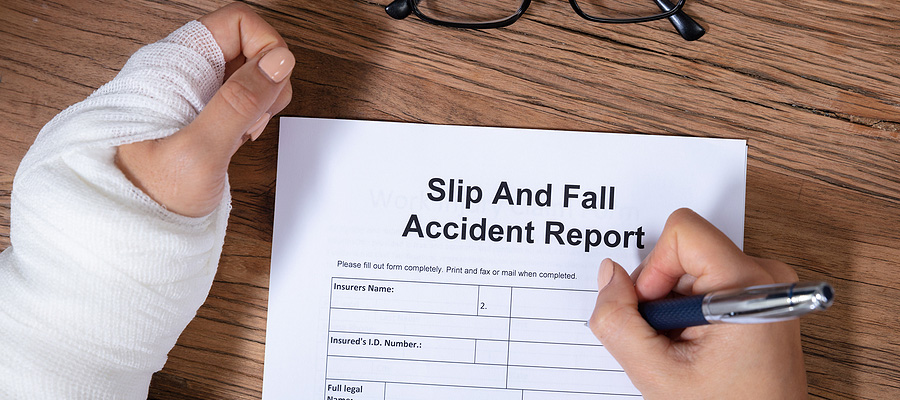
In Florida, slip and fall claims against businesses like AMC Theatres are usually brought under premises liability law, which requires the property owner or operator to use reasonable care to keep the premises reasonably safe for invited guests and employees.
When someone slips on a transitory foreign substance such as spilled soda, popcorn, or tracked‑in rainwater in a business establishment, Florida law generally requires the injured person to prove that the business had actual or constructive knowledge of the dangerous condition and should have taken action to remedy it, similar in structure to requirements found in Florida Statutes Chapter 440 for workplace injuries.
In an AMC Theatres slip and fall case, lawyers often look carefully at inspection and cleaning routines, how often ushers check aisles during and between shows, and how the theater deals with known risks like dark stairways, crowded concession areas, and wet lobby floors during storms.
Evidence such as footprints through a spill, dirty or sticky residue on the floor, or long gaps between documented inspections may help show constructive notice.
In summary, most Florida AMC slip and fall cases focus on whether the hazard was foreseeable, how long it was present, and whether AMC’s safety procedures were actually followed.
What should I do right after getting injured in an AMC Theatres location in Florida?
Immediately after a fall, your safety comes first.
If you can move, get yourself out of stairwells and off to the side of aisles or hallways so you are not in the direct path of other guests or staff, and ask for medical help right away if you feel strong pain, dizziness, or suspect you have broken a bone or hit your head.
Even if you feel like you can walk it off, getting checked by a medical professional soon after the incident helps document your injuries and link them clearly to the fall.
You should also report the fall to an AMC manager or supervisor as soon as possible and ask that an incident report be completed, confirming that it includes the date, time, theater number or auditorium, and a simple description of what caused your fall, such as spilled drink on the stair, popcorn and wrappers in the aisle, or water near the restroom entrance.
If you are able, take photos or video of the exact area where you fell, including the hazard, lighting conditions, your shoes, and any warning signs or lack of them.
The takeaway is that prompt medical care, a clear written report, and strong photos give you and your slip and fall lawyer a much better foundation for a claim.
Who can be held responsible for a slip and fall at an AMC movie theater?
The main defendant in an AMC Theatres slip and fall case is usually the company that owns or operates the specific AMC location where you were hurt, because it controls daily operations, safety policies, cleaning schedules, and staff training.
This includes responsibility for auditorium stairs, lobbies, concession areas, restrooms, hallways, and often portions of the exterior such as entrances immediately outside the doors.
However, AMC may not be the only potentially responsible party.
If your fall occurred in the parking lot, on shared walkways in a mall, or in a common area of a shopping center, the property owner, landlord, or management company may share responsibility.
If cleaning crews, maintenance contractors, or construction companies created the hazard or left a dangerous condition in place, they may also be added to the claim.
In summary, identifying all entities that controlled the area where you fell—AMC Theatres, a landlord, or a contractor—can reveal more insurance coverage and improve your chances of a full recovery.
What evidence should I collect after a fall inside or outside an AMC?
The evidence you gather can significantly impact your AMC slip and fall claim.
If you can safely do so, take wide and close‑up photos of the area where you fell, including the substance or condition that caused the fall, such as spilled soda, melted ice, candy, popcorn, wet floors, loose carpeting, or broken tiles.
Be sure to capture the lighting conditions—especially in dim auditoriums or stairwells—and any warning cones or signs, or the absence of them.
Get names and contact information for any witnesses who saw you fall or noticed the hazard beforehand, such as other guests or staff who may have commented about the condition.
Ask for a copy of the incident report if AMC will provide it, and keep all medical records, bills, and paperwork related to time missed from work.
An experienced slip and fall lawyer can then request surveillance footage, cleaning and inspection logs, and prior incident reports from AMC through formal legal requests.
In summary, photos, witness details, and paperwork preserved early help prevent AMC or its insurer from minimizing or disputing what happened.
What are the most common hazards that cause slip and fall injuries in AMC Theatres?
Movie theaters have a unique mix of hazards because of low lighting, crowds, and food and drink in the seating areas.
Common slip and fall risks in AMC locations include spilled sodas, melted ice, candy, and popcorn on auditorium stairs and aisles; slick lobby floors near concession stands; and wet or dirty flooring near restrooms or entrance doors during rainy weather.
Dim lighting in auditoriums and along stairways can make it harder for guests to see spills or objects in their path.
Trip hazards are also frequent in theater environments, including loose or frayed carpet, unsecured floor mats, uneven transitions between flooring surfaces, poorly maintained steps, and objects left in walkways like cleaning equipment or dropped items.
Outside the theater, cracked pavement, potholes, and inadequate lighting in parking lots can also cause serious falls.
In summary, AMC Theatres must manage both obvious and hidden hazards in dark, crowded spaces, and failures in these areas can lead to preventable injuries.
How is my claim different if I was a guest versus an employee at AMC Theatres?
If you are a guest injured at an AMC theater, your case is typically a premises liability claim against AMC’s liability insurance, focusing on whether the theater failed to use reasonable care in inspecting, cleaning, and maintaining the property and whether it had actual or constructive notice of the hazard that caused your fall.
As a guest, you may seek compensation for medical bills, future treatment, lost wages, and pain and suffering associated with your slip and fall injury.
If you are an AMC employee who slipped and fell while performing your job duties, your first avenue is usually a workers’ compensation claim.
In Florida, workers’ compensation is governed by laws such as Florida Statutes Chapter 440, which generally allow injured workers to receive medical treatment and partial wage replacement without having to prove fault, but usually do not cover pain and suffering.
In some situations, an AMC employee may also have a separate personal injury claim against a third party—for example, a mall owner or cleaning contractor—if that party’s negligence contributed to the dangerous condition.
In summary, guests rely on premises liability, employees rely on workers’ compensation and possible third‑party claims, and a lawyer can help you coordinate the best approach.
Can I get workers’ compensation for being injured as an employee in an AMC theater?
If you are employed by AMC and are injured in a slip and fall while doing your job, you may be entitled to workers’ compensation benefits under your state’s laws.
In Florida, workers’ compensation is generally a no‑fault system, meaning you do not have to prove AMC was negligent to receive benefits for a work‑related injury, as long as your accident happened in the course and scope of employment.
This can include falls while cleaning auditoriums, stocking concession stands, escorting guests, or working in the lobby or parking lot.
Workers’ compensation benefits can cover authorized medical treatment, a portion of your lost wages if you cannot work or must work fewer hours, and sometimes compensation for permanent impairment.
If an outside company—for example, a janitorial service or property management company—helped create or worsen the hazard, you may also have a third‑party personal injury claim that allows you to seek additional damages like pain and suffering.
The takeaway is that AMC employees often have access to both workers’ compensation and potential third‑party claims, and a slip and fall lawyer can help you pursue all available avenues.
What if AMC Theatres says it had no notice of the spill or hazard?
AMC Theatres and its insurers often argue that they had no idea about a spill, sticky floor, or other hazard before someone fell, suggesting the condition must have appeared only moments earlier.
Under Florida premises liability standards for transitory foreign substances, an injured person typically must prove that the business had actual knowledge of the danger or constructive knowledge—meaning the condition existed long enough, or occurred often enough, that the business should have known about it.
While this standard is favorable to businesses, it can still be met with the right evidence.
Constructive notice can be shown through signs that a hazard had been present for some time, such as footprints or drink tracks through a puddle, dried or sticky residue, multiple pieces of debris spread across an aisle, or complaints from other guests that went unanswered.
Long gaps between documented inspections in busy areas, or a history of similar incidents in the same theater or section, can also support an argument that the condition was foreseeable.
In summary, a “we had no notice” defense is common but not the end of your case, and a skilled lawyer can use physical evidence, records, and witness testimony to challenge it.
How long do I have to file an AMC Theatres slip and fall claim in Florida?
Slip and fall claims are governed by statutes of limitations, which are strict deadlines for filing a lawsuit.
In Florida, negligence-based personal injury claims, including many slip and fall cases at AMC Theatres, generally must be filed within a specific number of years from the date of the accident, though exact time limits can change based on legislative updates and the nature of the claim.
If you wait until after the statute of limitations expires, the court can dismiss your case regardless of its merits.
Different timeframes may apply if your claim involves workers’ compensation, if a government entity is involved, or if the injured person is a minor.
Key evidence like surveillance footage, internal logs, and witness recollections often fade or are lost long before these deadlines, so waiting too long can damage your case even if you remain within the legal time limit.
In summary, time is a critical factor in AMC slip and fall claims, and consulting a lawyer early helps protect both your legal rights and the evidence needed to support your case.
What kinds of damages can I seek after a serious AMC slip and fall?
If you are a guest bringing a personal injury claim, you may be able to seek several categories of damages from AMC Theatres and its insurer.
Economic damages can include emergency room bills, follow‑up doctor visits, physical therapy, prescription medications, assistive devices, and lost wages if you miss work or can no longer perform your previous job.
Non‑economic damages compensate you for less tangible harms such as pain and suffering, emotional distress, and loss of enjoyment of life.
If you are an AMC employee pursuing workers’ compensation, your benefits usually cover necessary medical treatment and a portion of lost wages, and sometimes compensation for permanent limitations, but not pain and suffering.
If you also have a third‑party claim against a landlord or contractor, that separate case may allow you to seek broader damages, including full wage loss and non‑economic damages.
In summary, the total value of an AMC slip and fall case depends on the full scope of your injuries, financial losses, and long‑term impact on your life, not just your initial medical bills.
Should I talk to AMC Theatres’ insurance company before calling a slip and fall lawyer?
After a slip and fall, you may be contacted by AMC’s insurance carrier or claims department and asked to provide a recorded statement or sign broad medical authorizations.
These requests can sound routine, but the adjuster’s priority is to limit the company’s financial exposure, not to maximize your recovery.
Statements you make while you are in pain or confused can later be used to challenge your memory, minimize your symptoms, or suggest that your injuries are unrelated to the fall.
Many injured guests and employees choose to speak with a slip and fall lawyer before engaging in detailed conversations with AMC’s insurer.
A lawyer can take over communications, help you avoid misleading questions, and restrict medical record requests to information that is truly relevant to your accident.
The takeaway is that contacting The Injury Firm before you give a recorded statement or sign paperwork puts an experienced advocate between you and the insurance company from the start.
How can a slip and fall attorney help in a case against AMC Theatres or another cinema chain?
A slip and fall attorney experienced with movie theater claims understands the particular risks and defenses that arise in dark, crowded entertainment venues.
Your attorney can quickly send preservation letters to AMC requiring it to keep surveillance video, cleaning logs, incident reports, and maintenance records that might otherwise be overwritten or discarded.
They can also visit the theater to assess lighting, floor conditions, and traffic patterns, and work with safety or engineering experts if needed to explain how and why the fall occurred.
On the claim‑building side, your lawyer will gather medical records, employment information, and documentation about how your injuries affect your daily life and future earning ability.
This information supports a detailed demand package to AMC’s insurer and shows that your case is trial‑ready if fair settlement talks fail.
In summary, against a large chain like AMC Theatres, having a seasoned slip and fall attorney levels the playing field and can significantly improve the outcome of your claim.
What if I was partly at fault for my AMC Theatres slip and fall?
It is common to question whether you share some responsibility for a fall, especially in a dark movie theater where you might have been carrying snacks, using your phone as a flashlight, or hurrying back to your seat.
In many states, including Florida, comparative negligence rules allow you to recover damages even if you were partly at fault, though your compensation may be reduced in proportion to your share of responsibility.
The legal focus is on whether AMC took reasonable steps to keep the area safe and whether its failures played a significant role in your injury.
For example, even if you were walking quickly, a sticky or wet step in a dim stairway with poor lighting and no warnings can still reflect negligence on AMC’s part.
A slip and fall lawyer can push back against efforts to blame you entirely and highlight theater safety issues like inadequate inspections, poor lighting, or failure to clean known trouble spots.
In summary, being less than perfect as a guest or employee does not automatically defeat your claim; what matters is how the theater’s conduct contributed to the accident.
How does The Injury Firm approach AMC Theatres and other entertainment venue slip and fall cases?
The Injury Firm has built substantial experience handling slip and fall claims in large commercial spaces, including movie theaters, casinos, hotels, and big‑box stores such as the venues covered on its pages for AMC Theatre, Seminole Hard Rock Hotel and Casino, Target, Walmart, and Big Box Store Slip and Fall.
This experience allows the firm to anticipate common defense strategies, such as arguing that the hazard appeared moments before the fall or that the guest was solely responsible, and to know which records and surveillance footage to request early.
The team understands the importance of documenting lighting conditions, crowd patterns, and food and drink policies in theaters like AMC.
With offices in Fort Lauderdale, West Palm Beach, and Orlando, and licenses in Arkansas, Florida, Georgia, Illinois, Kentucky, Massachusetts, and Tennessee, The Injury Firm combines local courtroom familiarity with multi‑state reach.
The firm emphasizes millions recovered for injured clients, a trial‑ready team willing to take cases through litigation if necessary, and a no‑fee‑unless‑recovery approach.
In summary, if you were hurt in an AMC Theatres slip and fall, The Injury Firm already understands the environment and how to build a persuasive case on your behalf.
How does The Injury Firm help injured slip and fall victims across Florida?
For people injured in slip and fall accidents at AMC Theatres and other venues across Florida, The Injury Firm offers accessible support and focused representation.
The Fort Lauderdale office serves Broward County and nearby areas, while the West Palm Beach and Orlando offices help clients throughout South and Central Florida, including those injured at shopping centers, hotels, supermarkets, and entertainment venues.
This geographic footprint allows the firm to investigate quickly, meet clients close to home, and understand local judges and juries.
The Injury Firm offers 24/7 free consultations and handles cases on a no‑fee‑unless‑recovery basis, so you can explore your options after an AMC Theatres slip and fall without upfront legal fees.
To talk about what happened, your injuries, and the next steps, you can call 954‑951‑0000, 561‑990‑4000, or 407‑444‑0000, email records@flinjuryfirm.com, or use the contact form at The Injury Firm’s Fort Lauderdale contact page.
In summary, if you were injured in a slip and fall at an AMC theater anywhere in Florida, The Injury Firm is ready with a trial‑ready team focused on protecting your health, your income, and your future.
Quick comparison of AMC Theatres slip and fall situations
Scenario | Guest | Employee |
|---|---|---|
Primary claim path | Premises liability claim against AMC Theatres’ liability insurance. | Workers’ compensation claim, plus possible third‑party claim against a landlord or contractor. |
Main damages pursued | Medical bills, future treatment, lost wages, pain and suffering, and other related losses. | Medical care and wage benefits through workers’ comp, and additional damages if a third‑party claim applies. |
Key legal questions | Did AMC know or should it have known about the hazard and fail to act reasonably? | Did the injury arise out of and in the course of employment, and did any outside party contribute to the hazard? |


SLIP AND FALL ACCIDENTS IN LARGE STORES
CONTACT US NOW
FREE CONSULTATION
AMC Theatres Slip and Fall Accident: How to Handle a Personal Injury Claim
This page is for moviegoers and employees who were hurt in a slip and fall at an AMC Theatres location and want clear guidance on their rights, what to do next, and how The Injury Firm can help with a personal injury claim.
Skip to AMC Theatres Slip and Fall Accident Answers
- What should I do right after getting injured in an AMC Theatres location in Florida?
- How does slip and fall litigation work in Florida for AMC Theatres accidents?
- Who can be held responsible for a slip and fall at an AMC movie theater?
- What evidence should I collect after a fall inside or outside an AMC?
- What are the most common hazards that cause slip and fall injuries in AMC Theatres?
- How is my claim different if I was a guest versus an employee at AMC Theatres?
- Can I get workers’ compensation for being injured as an employee in an AMC theater?
- What if AMC Theatres says it had no notice of the spill or hazard?
- How long do I have to file an AMC Theatres slip and fall claim in Florida?
- What kinds of damages can I seek after a serious AMC slip and fall?
- Should I talk to AMC Theatres’ insurance company before calling a slip and fall lawyer?
- How can a slip and fall attorney help in a case against AMC Theatres or another cinema chain?
- What if I was partly at fault for my AMC Theatres slip and fall?
- How does The Injury Firm approach AMC Theatres and other entertainment venue slip and fall cases?
- How does The Injury Firm help injured slip and fall victims across Florida?
How does slip and fall litigation work in Florida for AMC Theatres accidents?
In Florida, slip and fall claims against businesses like AMC Theatres are usually brought under premises liability law, which requires the property owner or operator to use reasonable care to keep the premises reasonably safe for invited guests and employees.
When someone slips on a transitory foreign substance such as spilled soda, popcorn, or tracked‑in rainwater in a business establishment, Florida law generally requires the injured person to prove that the business had actual or constructive knowledge of the dangerous condition and should have taken action to remedy it, similar in structure to requirements found in Florida Statutes Chapter 440 for workplace injuries.
In an AMC Theatres slip and fall case, lawyers often look carefully at inspection and cleaning routines, how often ushers check aisles during and between shows, and how the theater deals with known risks like dark stairways, crowded concession areas, and wet lobby floors during storms.
Evidence such as footprints through a spill, dirty or sticky residue on the floor, or long gaps between documented inspections may help show constructive notice.
In summary, most Florida AMC slip and fall cases focus on whether the hazard was foreseeable, how long it was present, and whether AMC’s safety procedures were actually followed.
What should I do right after getting injured in an AMC Theatres location in Florida?
Immediately after a fall, your safety comes first.
If you can move, get yourself out of stairwells and off to the side of aisles or hallways so you are not in the direct path of other guests or staff, and ask for medical help right away if you feel strong pain, dizziness, or suspect you have broken a bone or hit your head.
Even if you feel like you can walk it off, getting checked by a medical professional soon after the incident helps document your injuries and link them clearly to the fall.
You should also report the fall to an AMC manager or supervisor as soon as possible and ask that an incident report be completed, confirming that it includes the date, time, theater number or auditorium, and a simple description of what caused your fall, such as spilled drink on the stair, popcorn and wrappers in the aisle, or water near the restroom entrance.
If you are able, take photos or video of the exact area where you fell, including the hazard, lighting conditions, your shoes, and any warning signs or lack of them.
The takeaway is that prompt medical care, a clear written report, and strong photos give you and your slip and fall lawyer a much better foundation for a claim.
Who can be held responsible for a slip and fall at an AMC movie theater?
The main defendant in an AMC Theatres slip and fall case is usually the company that owns or operates the specific AMC location where you were hurt, because it controls daily operations, safety policies, cleaning schedules, and staff training.
This includes responsibility for auditorium stairs, lobbies, concession areas, restrooms, hallways, and often portions of the exterior such as entrances immediately outside the doors.
However, AMC may not be the only potentially responsible party.
If your fall occurred in the parking lot, on shared walkways in a mall, or in a common area of a shopping center, the property owner, landlord, or management company may share responsibility.
If cleaning crews, maintenance contractors, or construction companies created the hazard or left a dangerous condition in place, they may also be added to the claim.
In summary, identifying all entities that controlled the area where you fell—AMC Theatres, a landlord, or a contractor—can reveal more insurance coverage and improve your chances of a full recovery.
What evidence should I collect after a fall inside or outside an AMC?
The evidence you gather can significantly impact your AMC slip and fall claim.
If you can safely do so, take wide and close‑up photos of the area where you fell, including the substance or condition that caused the fall, such as spilled soda, melted ice, candy, popcorn, wet floors, loose carpeting, or broken tiles.
Be sure to capture the lighting conditions—especially in dim auditoriums or stairwells—and any warning cones or signs, or the absence of them.
Get names and contact information for any witnesses who saw you fall or noticed the hazard beforehand, such as other guests or staff who may have commented about the condition.
Ask for a copy of the incident report if AMC will provide it, and keep all medical records, bills, and paperwork related to time missed from work.
An experienced slip and fall lawyer can then request surveillance footage, cleaning and inspection logs, and prior incident reports from AMC through formal legal requests.
In summary, photos, witness details, and paperwork preserved early help prevent AMC or its insurer from minimizing or disputing what happened.
What are the most common hazards that cause slip and fall injuries in AMC Theatres?
Movie theaters have a unique mix of hazards because of low lighting, crowds, and food and drink in the seating areas.
Common slip and fall risks in AMC locations include spilled sodas, melted ice, candy, and popcorn on auditorium stairs and aisles; slick lobby floors near concession stands; and wet or dirty flooring near restrooms or entrance doors during rainy weather.
Dim lighting in auditoriums and along stairways can make it harder for guests to see spills or objects in their path.
Trip hazards are also frequent in theater environments, including loose or frayed carpet, unsecured floor mats, uneven transitions between flooring surfaces, poorly maintained steps, and objects left in walkways like cleaning equipment or dropped items.
Outside the theater, cracked pavement, potholes, and inadequate lighting in parking lots can also cause serious falls.
In summary, AMC Theatres must manage both obvious and hidden hazards in dark, crowded spaces, and failures in these areas can lead to preventable injuries.
How is my claim different if I was a guest versus an employee at AMC Theatres?
If you are a guest injured at an AMC theater, your case is typically a premises liability claim against AMC’s liability insurance, focusing on whether the theater failed to use reasonable care in inspecting, cleaning, and maintaining the property and whether it had actual or constructive notice of the hazard that caused your fall.
As a guest, you may seek compensation for medical bills, future treatment, lost wages, and pain and suffering associated with your slip and fall injury.
If you are an AMC employee who slipped and fell while performing your job duties, your first avenue is usually a workers’ compensation claim.
In Florida, workers’ compensation is governed by laws such as Florida Statutes Chapter 440, which generally allow injured workers to receive medical treatment and partial wage replacement without having to prove fault, but usually do not cover pain and suffering.
In some situations, an AMC employee may also have a separate personal injury claim against a third party—for example, a mall owner or cleaning contractor—if that party’s negligence contributed to the dangerous condition.
In summary, guests rely on premises liability, employees rely on workers’ compensation and possible third‑party claims, and a lawyer can help you coordinate the best approach.
Can I get workers’ compensation for being injured as an employee in an AMC theater?
If you are employed by AMC and are injured in a slip and fall while doing your job, you may be entitled to workers’ compensation benefits under your state’s laws.
In Florida, workers’ compensation is generally a no‑fault system, meaning you do not have to prove AMC was negligent to receive benefits for a work‑related injury, as long as your accident happened in the course and scope of employment.
This can include falls while cleaning auditoriums, stocking concession stands, escorting guests, or working in the lobby or parking lot.
Workers’ compensation benefits can cover authorized medical treatment, a portion of your lost wages if you cannot work or must work fewer hours, and sometimes compensation for permanent impairment.
If an outside company—for example, a janitorial service or property management company—helped create or worsen the hazard, you may also have a third‑party personal injury claim that allows you to seek additional damages like pain and suffering.
The takeaway is that AMC employees often have access to both workers’ compensation and potential third‑party claims, and a slip and fall lawyer can help you pursue all available avenues.
What if AMC Theatres says it had no notice of the spill or hazard?
AMC Theatres and its insurers often argue that they had no idea about a spill, sticky floor, or other hazard before someone fell, suggesting the condition must have appeared only moments earlier.
Under Florida premises liability standards for transitory foreign substances, an injured person typically must prove that the business had actual knowledge of the danger or constructive knowledge—meaning the condition existed long enough, or occurred often enough, that the business should have known about it.
While this standard is favorable to businesses, it can still be met with the right evidence.
Constructive notice can be shown through signs that a hazard had been present for some time, such as footprints or drink tracks through a puddle, dried or sticky residue, multiple pieces of debris spread across an aisle, or complaints from other guests that went unanswered.
Long gaps between documented inspections in busy areas, or a history of similar incidents in the same theater or section, can also support an argument that the condition was foreseeable.
In summary, a “we had no notice” defense is common but not the end of your case, and a skilled lawyer can use physical evidence, records, and witness testimony to challenge it.
How long do I have to file an AMC Theatres slip and fall claim in Florida?
Slip and fall claims are governed by statutes of limitations, which are strict deadlines for filing a lawsuit.
In Florida, negligence-based personal injury claims, including many slip and fall cases at AMC Theatres, generally must be filed within a specific number of years from the date of the accident, though exact time limits can change based on legislative updates and the nature of the claim.
If you wait until after the statute of limitations expires, the court can dismiss your case regardless of its merits.
Different timeframes may apply if your claim involves workers’ compensation, if a government entity is involved, or if the injured person is a minor.
Key evidence like surveillance footage, internal logs, and witness recollections often fade or are lost long before these deadlines, so waiting too long can damage your case even if you remain within the legal time limit.
In summary, time is a critical factor in AMC slip and fall claims, and consulting a lawyer early helps protect both your legal rights and the evidence needed to support your case.
What kinds of damages can I seek after a serious AMC slip and fall?
If you are a guest bringing a personal injury claim, you may be able to seek several categories of damages from AMC Theatres and its insurer.
Economic damages can include emergency room bills, follow‑up doctor visits, physical therapy, prescription medications, assistive devices, and lost wages if you miss work or can no longer perform your previous job.
Non‑economic damages compensate you for less tangible harms such as pain and suffering, emotional distress, and loss of enjoyment of life.
If you are an AMC employee pursuing workers’ compensation, your benefits usually cover necessary medical treatment and a portion of lost wages, and sometimes compensation for permanent limitations, but not pain and suffering.
If you also have a third‑party claim against a landlord or contractor, that separate case may allow you to seek broader damages, including full wage loss and non‑economic damages.
In summary, the total value of an AMC slip and fall case depends on the full scope of your injuries, financial losses, and long‑term impact on your life, not just your initial medical bills.
Should I talk to AMC Theatres’ insurance company before calling a slip and fall lawyer?
After a slip and fall, you may be contacted by AMC’s insurance carrier or claims department and asked to provide a recorded statement or sign broad medical authorizations.
These requests can sound routine, but the adjuster’s priority is to limit the company’s financial exposure, not to maximize your recovery.
Statements you make while you are in pain or confused can later be used to challenge your memory, minimize your symptoms, or suggest that your injuries are unrelated to the fall.
Many injured guests and employees choose to speak with a slip and fall lawyer before engaging in detailed conversations with AMC’s insurer.
A lawyer can take over communications, help you avoid misleading questions, and restrict medical record requests to information that is truly relevant to your accident.
The takeaway is that contacting The Injury Firm before you give a recorded statement or sign paperwork puts an experienced advocate between you and the insurance company from the start.
How can a slip and fall attorney help in a case against AMC Theatres or another cinema chain?
A slip and fall attorney experienced with movie theater claims understands the particular risks and defenses that arise in dark, crowded entertainment venues.
Your attorney can quickly send preservation letters to AMC requiring it to keep surveillance video, cleaning logs, incident reports, and maintenance records that might otherwise be overwritten or discarded.
They can also visit the theater to assess lighting, floor conditions, and traffic patterns, and work with safety or engineering experts if needed to explain how and why the fall occurred.
On the claim‑building side, your lawyer will gather medical records, employment information, and documentation about how your injuries affect your daily life and future earning ability.
This information supports a detailed demand package to AMC’s insurer and shows that your case is trial‑ready if fair settlement talks fail.
In summary, against a large chain like AMC Theatres, having a seasoned slip and fall attorney levels the playing field and can significantly improve the outcome of your claim.
What if I was partly at fault for my AMC Theatres slip and fall?
It is common to question whether you share some responsibility for a fall, especially in a dark movie theater where you might have been carrying snacks, using your phone as a flashlight, or hurrying back to your seat.
In many states, including Florida, comparative negligence rules allow you to recover damages even if you were partly at fault, though your compensation may be reduced in proportion to your share of responsibility.
The legal focus is on whether AMC took reasonable steps to keep the area safe and whether its failures played a significant role in your injury.
For example, even if you were walking quickly, a sticky or wet step in a dim stairway with poor lighting and no warnings can still reflect negligence on AMC’s part.
A slip and fall lawyer can push back against efforts to blame you entirely and highlight theater safety issues like inadequate inspections, poor lighting, or failure to clean known trouble spots.
In summary, being less than perfect as a guest or employee does not automatically defeat your claim; what matters is how the theater’s conduct contributed to the accident.
How does The Injury Firm approach AMC Theatres and other entertainment venue slip and fall cases?
The Injury Firm has built substantial experience handling slip and fall claims in large commercial spaces, including movie theaters, casinos, hotels, and big‑box stores such as the venues covered on its pages for AMC Theatre, Seminole Hard Rock Hotel and Casino, Target, Walmart, and Big Box Store Slip and Fall.
This experience allows the firm to anticipate common defense strategies, such as arguing that the hazard appeared moments before the fall or that the guest was solely responsible, and to know which records and surveillance footage to request early.
The team understands the importance of documenting lighting conditions, crowd patterns, and food and drink policies in theaters like AMC.
With offices in Fort Lauderdale, West Palm Beach, and Orlando, and licenses in Arkansas, Florida, Georgia, Illinois, Kentucky, Massachusetts, and Tennessee, The Injury Firm combines local courtroom familiarity with multi‑state reach.
The firm emphasizes millions recovered for injured clients, a trial‑ready team willing to take cases through litigation if necessary, and a no‑fee‑unless‑recovery approach.
In summary, if you were hurt in an AMC Theatres slip and fall, The Injury Firm already understands the environment and how to build a persuasive case on your behalf.
How does The Injury Firm help injured slip and fall victims across Florida?
For people injured in slip and fall accidents at AMC Theatres and other venues across Florida, The Injury Firm offers accessible support and focused representation.
The Fort Lauderdale office serves Broward County and nearby areas, while the West Palm Beach and Orlando offices help clients throughout South and Central Florida, including those injured at shopping centers, hotels, supermarkets, and entertainment venues.
This geographic footprint allows the firm to investigate quickly, meet clients close to home, and understand local judges and juries.
The Injury Firm offers 24/7 free consultations and handles cases on a no‑fee‑unless‑recovery basis, so you can explore your options after an AMC Theatres slip and fall without upfront legal fees.
To talk about what happened, your injuries, and the next steps, you can call 954‑951‑0000, 561‑990‑4000, or 407‑444‑0000, email records@flinjuryfirm.com, or use the contact form at The Injury Firm’s Fort Lauderdale contact page.
In summary, if you were injured in a slip and fall at an AMC theater anywhere in Florida, The Injury Firm is ready with a trial‑ready team focused on protecting your health, your income, and your future.
Quick comparison of AMC Theatres slip and fall situations
| Scenario | Guest | Employee |
|---|---|---|
| Primary claim path | Premises liability claim against AMC Theatres’ liability insurance. | Workers’ compensation claim, plus possible third‑party claim against a landlord or contractor. |
| Main damages pursued | Medical bills, future treatment, lost wages, pain and suffering, and other related losses. | Medical care and wage benefits through workers’ comp, and additional damages if a third‑party claim applies. |
| Key legal questions | Did AMC know or should it have known about the hazard and fail to act reasonably? | Did the injury arise out of and in the course of employment, and did any outside party contribute to the hazard? |
PRACTICE AREA - SLIP AND FALL IN LARGE STORES
CONTACT US NOW
FREE CONSULTATION