
PRACTICE AREA - CAR ACCIDENTS
T-Bone Car Accident Injuries: Complete Legal Guide to Side-Impact Collision Claims in Florida
This article explains the types of injuries most often seen in T-bone car accidents, including head and brain trauma, spinal injuries, broken bones, internal organ damage, whiplash, and chest or abdominal injuries. It outlines why side-impact crashes are especially dangerous and how the force of collision can cause severe or even fatal harm, particularly for those seated closest to the site of impact. Readers will learn about common medical consequences of broadside collisions and the importance of proper evaluation and treatment after a T-bone accident.
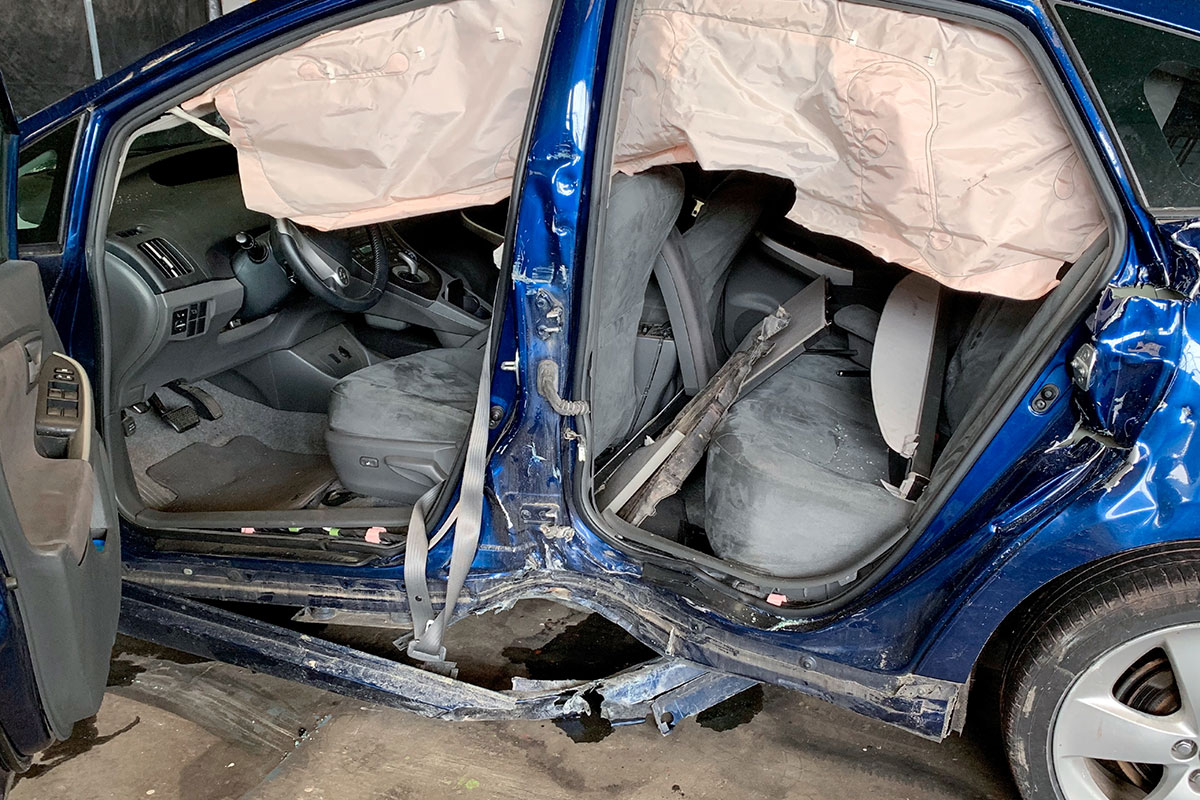
T-bone car accidents, also known as side-impact collisions, are among the most dangerous types of crashes on Florida roads. These devastating accidents often result in severe injuries, significant property damage, and complex legal challenges. If you've been injured in a T-bone accident, understanding your rights and the types of injuries commonly associated with these crashes is crucial for securing the compensation you deserve.
At The Injury Firm, we've represented hundreds of T-bone accident victims throughout Florida. Our experienced attorneys understand the unique challenges these cases present and fight aggressively to hold negligent drivers accountable for the devastating injuries they cause.
What is a T-Bone Car Accident?
A T-bone accident, also called a side-impact collision or broadside collision, occurs when the front of one vehicle strikes the side of another vehicle, forming a "T" shape. These accidents are particularly dangerous because the sides of vehicles have less structural protection compared to the front and rear, which are designed with crumple zones to absorb impact.
T-bone accidents commonly occur at:
- Intersections - The most common location for side-impact crashes
- Parking lots - When drivers fail to yield or see oncoming traffic
- Highway on-ramps and off-ramps - During merging situations
- Driveways - When pulling out into traffic
- Four-way stops - Due to confusion about right-of-way
Why T-Bone Accidents Are So Dangerous
Side-impact collisions are particularly deadly because:
- Limited side protection in vehicle design
- Shorter distance between the impact point and occupants
- Higher likelihood of rollover accidents
- Potential for multiple-vehicle crashes
- Greater risk of ejection from the vehicle
Common Causes of T-Bone Car Accidents in Florida
Understanding the common causes of T-bone accidents can help establish liability and strengthen your personal injury claim. Most side-impact collisions result from negligent driving behaviors, including:
Traffic Violation Causes
- Running red lights or stop signs - The leading cause of intersection T-bone accidents
- Failure to yield right-of-way - Especially during left turns
- Illegal turns - Making turns from incorrect lanes or prohibited areas
- Speeding through intersections - Reduces reaction time and increases impact severity
- Rolling through stop signs - Failing to come to a complete stop
Impaired and Distracted Driving
- Drunk driving - Alcohol impairs judgment and reaction time
- Drug impairment - Both illegal drugs and prescription medications
- Texting while driving - Takes eyes off the road at critical moments
- Cell phone conversations - Reduces attention to traffic signals
- Other distractions - Eating, grooming, or adjusting controls
Environmental and Road Factors
- Poor weather conditions - Rain, fog, or sun glare
- Malfunctioning traffic signals - Creating confusion about right-of-way
- Obstructed views - Buildings, vegetation, or parked cars blocking sightlines
- Road construction - Altered traffic patterns and temporary signals
- Inadequate signage - Missing or unclear traffic control devices
Typical T-Bone Accident Injuries
T-bone accidents often result in more severe injuries than other types of crashes due to the direct side impact and limited protection. The severity of injuries depends on factors such as speed, vehicle size, and the specific point of impact.
Head and Brain Injuries
Head injuries are extremely common in T-bone accidents due to the violent side-to-side motion:
- Traumatic Brain Injury (TBI) - Can range from mild concussions to severe brain damage
- Concussions - Often result from the brain striking the side of the skull
- Skull fractures - Direct impact with windows or door frames
- Penetrating head injuries - From broken glass or debris
- Closed head injuries - Internal brain damage without skull penetration
Neck and Spinal Cord Injuries
The lateral forces in T-bone accidents often cause severe neck and spine damage:
- Whiplash - Rapid side-to-side head movement damaging soft tissues
- Cervical spine fractures - Broken bones in the neck area
- Herniated discs - Spinal disc damage causing pain and numbness
- Spinal cord injuries - Can result in partial or complete paralysis
- Facet joint injuries - Damage to spine stabilizing joints
Chest and Torso Injuries
Side-impact forces often cause serious chest and internal injuries:
- Broken ribs - Common due to direct side impact
- Punctured lungs - From broken ribs penetrating lung tissue
- Internal bleeding - Damage to internal organs
- Liver and spleen injuries - Particularly on the driver's side impacts
- Heart injuries - Blunt force trauma to the chest cavity
Extremity Injuries
Arms, legs, and hands often suffer significant damage in side-impact crashes:
- Broken arms and legs - Especially on the impact side
- Crushed limbs - From vehicle intrusion into the passenger compartment
- Hand and wrist fractures - From gripping the steering wheel during impact
- Hip injuries - Particularly severe in side-impact crashes
- Knee injuries - From impact with door panels or center console
Most Severe T-Bone Accident Injury Types
Paralysis and Spinal Cord Damage
T-bone accidents are a leading cause of spinal cord injuries that result in paralysis:
- Paraplegia - Paralysis of the lower body and legs
- Quadriplegia - Paralysis of all four limbs
- Incomplete paralysis - Partial loss of movement and sensation
- Complete paralysis - Total loss of movement below the injury site
Severe Traumatic Brain Injuries
Brain injuries from T-bone accidents can have lifelong consequences:
- Cognitive impairment - Difficulty with memory, concentration, and decision-making
- Personality changes - Alterations in behavior and emotional regulation
- Motor function loss - Difficulty with coordination and movement
- Speech and language problems - Communication difficulties
- Seizure disorders - Long-term neurological complications
Internal Organ Damage
The force of side impacts can cause severe internal injuries:
- Liver lacerations - Can cause life-threatening internal bleeding
- Spleen rupture - Often requires emergency surgery
- Kidney damage - Can lead to long-term health complications
- Bowel injuries - May require multiple surgeries to repair
- Diaphragm tears - Can affect breathing and require surgical repair
Factors Affecting T-Bone Accident Injury Severity
Speed at Impact
The speed of the striking vehicle is the primary factor determining injury severity:
- Low-speed impacts (under 15 mph) - Often result in soft tissue injuries
- Moderate-speed impacts (15-35 mph) - Can cause broken bones and organ damage
- High-speed impacts (over 35 mph) - Often result in life-threatening injuries
Vehicle Size and Weight Differences
Disparities in vehicle size significantly affect injury outcomes:
- SUV vs. sedan crashes - Smaller vehicles suffer more severe damage
- Truck vs. car collisions - Cars are often completely overridden
- Motorcycle side impacts - Almost always result in severe injuries
Safety Equipment and Vehicle Design
- Side airbags - Can significantly reduce head and chest injuries
- Seat belt usage - Prevents ejection but may cause specific injury patterns
- Vehicle age - Newer cars have better side-impact protection
- Door frame strength - Affects cabin intrusion and injury severity
Who's at Fault in T-Bone Car Accidents?
Determining fault in T-bone accidents is crucial for securing compensation. While fault determination can sometimes be complex, certain patterns are common in side-impact collisions.
Most Common Fault Scenarios
Left-Turn Accidents
The majority of T-bone accidents involve drivers making left turns who fail to yield to oncoming traffic. In these cases:
- The turning driver is typically at fault
- They have a duty to ensure the turn can be made safely
- Oncoming traffic has the right-of-way
- Exceptions exist when the straight-traveling driver violates traffic laws
Running Red Lights or Stop Signs
When a driver runs a traffic control device and strikes another vehicle:
- The violating driver is almost always at fault
- Traffic camera footage can provide clear evidence
- Witness testimony is crucial in these cases
- Tickets issued at the scene support liability claims
Exceptions to Standard Fault Rules
While fault seems obvious in many T-bone accidents, several exceptions can complicate liability:
- Malfunctioning traffic signals - May shift liability to government entities
- Excessive speeding by the "innocent" driver - Can create shared fault
- Distracted driving by either party - May affect comparative negligence
- Impaired driving - Can override normal right-of-way rules
- Emergency vehicle situations - Create special right-of-way rules
Comparative Negligence in Florida
Florida follows a comparative negligence system, meaning:
- Multiple parties can share fault for an accident
- Your compensation is reduced by your percentage of fault
- You can still recover damages even if you're partially at fault
- The total fault percentage among all parties must equal 100%
Critical Evidence Collection in T-Bone Accident Cases
Strong evidence is essential for proving fault and securing fair compensation in T-bone accident cases. The more evidence available, the stronger your case becomes.
Immediate Scene Evidence
Evidence collected at the accident scene is often the most valuable:
- Photographs - Vehicle damage, skid marks, traffic signals, street signs
- Police reports - Officer observations, citations issued, preliminary fault determination
- Witness statements - Contact information and accounts from bystanders
- Traffic camera footage - From intersection cameras or nearby businesses
- Vehicle position - Final resting positions can indicate impact dynamics
Technical Evidence
Advanced evidence collection can provide crucial insights:
- Vehicle data recorders - "Black box" data showing speed and braking
- Cell phone records - Can prove distracted driving
- Accident reconstruction - Expert analysis of collision dynamics
- Vehicle inspection - Mechanical failure analysis
- Road condition assessment - Weather, construction, or design factors
Medical Evidence
Comprehensive medical documentation supports injury claims:
- Emergency room records - Initial injury assessment and treatment
- Diagnostic imaging - X-rays, MRIs, CT scans showing injury extent
- Medical expert testimony - Professional opinions on injury causation
- Treatment records - Ongoing medical care and rehabilitation
- Prognosis reports - Future medical needs and permanent impairments
Types of Compensation Available for T-Bone Accident Victims
T-bone accident victims may be entitled to various types of compensation, depending on the severity of their injuries and the circumstances of the crash.
Economic Damages
Economic damages cover quantifiable financial losses:
- Medical expenses - Past and future medical bills, rehabilitation costs
- Lost wages - Income lost due to inability to work
- Lost earning capacity - Reduced ability to earn income in the future
- Property damage - Vehicle repair or replacement costs
- Home modifications - Accessibility improvements for disabled victims
- Medical equipment - Wheelchairs, prosthetics, and assistive devices
Non-Economic Damages
Non-economic damages address intangible losses:
- Pain and suffering - Physical pain and emotional distress
- Mental anguish - Anxiety, depression, and psychological trauma
- Loss of enjoyment of life - Inability to participate in previously enjoyed activities
- Disfigurement - Permanent scarring or physical changes
- Loss of consortium - Impact on relationships with spouse and family
Punitive Damages
In cases involving particularly egregious conduct, punitive damages may be awarded to:
- Punish the wrongdoer for reckless or intentional behavior
- Deter similar conduct by others
- Send a message about the seriousness of the violation
The Legal Process for T-Bone Accident Claims
Understanding the legal process helps you know what to expect during your T-bone accident case:
Phase 1: Initial Investigation and Case Development (1-3 months)
- Free consultation and case evaluation
- Evidence gathering and preservation
- Medical record collection
- Expert witness consultation
- Insurance company notification
Phase 2: Medical Treatment and Documentation (ongoing)
- Continued medical care and rehabilitation
- Documentation of injury progression
- Expert medical evaluations
- Future medical needs assessment
Phase 3: Settlement Negotiations (3-12 months)
- Demand letter preparation and submission
- Insurance company response and counteroffers
- Negotiation of settlement terms
- Mediation if necessary
Phase 4: Litigation (if settlement fails)
- Lawsuit filing and defendant service
- Discovery process and depositions
- Expert witness preparation
- Trial preparation and court proceedings
Why You Need an Experienced T-Bone Accident Attorney
T-bone accident cases present unique challenges that require specialized legal expertise:
Complex Liability Issues
Our attorneys understand the intricacies of T-bone accident liability, including:
- Traffic law violations and their impact on fault
- Comparative negligence analysis
- Multiple party liability scenarios
- Insurance coverage complications
Severe Injury Expertise
We have extensive experience handling catastrophic injury cases involving:
- Spinal cord injuries and paralysis
- Traumatic brain injuries
- Internal organ damage
- Long-term disability and care needs
Maximum Compensation Recovery
Our legal team works to secure full compensation by:
- Accurately calculating all current and future damages
- Identifying all available insurance coverage
- Pursuing multiple liable parties when appropriate
- Fighting for fair settlements or trial verdicts
Frequently Asked Questions About T-Bone Car Accidents
What should I do immediately after a T-bone accident?
Seek immediate medical attention, even if you don't feel injured. Call 911, document the scene with photos, gather witness information, and contact an experienced personal injury attorney as soon as possible.
How long do I have to file a lawsuit for a T-bone accident in Florida?
In Florida, you generally have two years from the date of the accident to file a personal injury lawsuit. However, it's important to contact an attorney immediately to preserve evidence and protect your rights.
Can I recover compensation if I was partially at fault for the T-bone accident?
Yes, Florida's comparative negligence law allows you to recover compensation even if you were partially at fault. Your compensation will be reduced by your percentage of fault, but you can still receive damages.
What if the other driver doesn't have insurance?
If the at-fault driver is uninsured, you may be able to recover compensation through your own uninsured motorist coverage. An attorney can help you explore all available options for compensation.
How much is my T-bone accident case worth?
Case values depend on many factors including injury severity, medical expenses, lost wages, pain and suffering, and long-term impacts. An experienced attorney can evaluate your specific case and provide an estimate of potential compensation.
Should I accept the insurance company's first settlement offer?
No, initial settlement offers are typically far below fair value. Insurance companies often try to settle quickly and cheaply. Always consult with an attorney before accepting any settlement offer.
What evidence is most important in T-bone accident cases?
Critical evidence includes police reports, witness statements, traffic camera footage, medical records, and expert accident reconstruction analysis. The sooner you contact an attorney, the better chance of preserving crucial evidence.
How long does it take to resolve a T-bone accident case?
Case timelines vary depending on injury severity and case complexity. Simple cases may resolve in a few months, while complex cases involving severe injuries can take two years or longer.
Can I sue for punitive damages in a T-bone accident case?
Punitive damages may be available if the at-fault driver's conduct was particularly reckless, such as drunk driving or extreme speeding. Your attorney can assess whether punitive damages apply to your case.
What if my injuries don't appear until days after the accident?
Many serious injuries, including brain injuries and internal damage, may not show symptoms immediately. This is why it's crucial to seek medical attention right away and continue monitoring your health after any accident.
Contact The Injury Firm for Your T-Bone Accident Case
Don't let a T-bone accident destroy your financial future. At The Injury Firm, we have the experience and resources necessary to handle complex side-impact collision cases and fight for the maximum compensation you deserve.
Our Florida T-bone accident attorneys offer:
- Free consultations with no obligation
- Contingency fee arrangements – no fees unless we win
- Comprehensive case investigation and evidence gathering
- Access to top medical and accident reconstruction experts
- Aggressive representation against insurance companies
- 24/7 availability for urgent matters
T-bone accidents often result in the most severe injuries and largest settlements of any type of car crash. You need experienced legal representation that understands the unique challenges these cases present and has a proven track record of success.
Time is critical in T-bone accident cases. Evidence can disappear, witnesses' memories fade, and insurance deadlines approach quickly. Contact us today to protect your rights and start building your strongest possible case.
We serve clients throughout Florida, including Miami-Dade, Broward, Palm Beach, and surrounding counties. When a T-bone accident changes your life forever, make sure you have the strongest possible legal team fighting for your future.
Contact The Injury Firm today for your free consultation and let us fight for the justice and compensation you deserve after your T-bone car accident.
CONTACT US NOW
FREE CONSULTATION


PRACTICE AREA - CAR ACCIDENTS
CAR ACCIDENT
T-Bone Car Accident Injuries: Complete Legal Guide to Side-Impact Collision Claims in Florida
This article explains the types of injuries most often seen in T-bone car accidents, including head and brain trauma, spinal injuries, broken bones, internal organ damage, whiplash, and chest or abdominal injuries. It outlines why side-impact crashes are especially dangerous and how the force of collision can cause severe or even fatal harm, particularly for those seated closest to the site of impact. Readers will learn about common medical consequences of broadside collisions and the importance of proper evaluation and treatment after a T-bone accident.
T-bone car accidents, also known as side-impact collisions, are among the most dangerous types of crashes on Florida roads. These devastating accidents often result in severe injuries, significant property damage, and complex legal challenges. If you've been injured in a T-bone accident, understanding your rights and the types of injuries commonly associated with these crashes is crucial for securing the compensation you deserve.
At The Injury Firm, we've represented hundreds of T-bone accident victims throughout Florida. Our experienced attorneys understand the unique challenges these cases present and fight aggressively to hold negligent drivers accountable for the devastating injuries they cause.
What is a T-Bone Car Accident?
A T-bone accident, also called a side-impact collision or broadside collision, occurs when the front of one vehicle strikes the side of another vehicle, forming a "T" shape. These accidents are particularly dangerous because the sides of vehicles have less structural protection compared to the front and rear, which are designed with crumple zones to absorb impact.
T-bone accidents commonly occur at:
- Intersections - The most common location for side-impact crashes
- Parking lots - When drivers fail to yield or see oncoming traffic
- Highway on-ramps and off-ramps - During merging situations
- Driveways - When pulling out into traffic
- Four-way stops - Due to confusion about right-of-way
Why T-Bone Accidents Are So Dangerous
Side-impact collisions are particularly deadly because:
- Limited side protection in vehicle design
- Shorter distance between the impact point and occupants
- Higher likelihood of rollover accidents
- Potential for multiple-vehicle crashes
- Greater risk of ejection from the vehicle
Common Causes of T-Bone Car Accidents in Florida
Understanding the common causes of T-bone accidents can help establish liability and strengthen your personal injury claim. Most side-impact collisions result from negligent driving behaviors, including:
Traffic Violation Causes
- Running red lights or stop signs - The leading cause of intersection T-bone accidents
- Failure to yield right-of-way - Especially during left turns
- Illegal turns - Making turns from incorrect lanes or prohibited areas
- Speeding through intersections - Reduces reaction time and increases impact severity
- Rolling through stop signs - Failing to come to a complete stop
Impaired and Distracted Driving
- Drunk driving - Alcohol impairs judgment and reaction time
- Drug impairment - Both illegal drugs and prescription medications
- Texting while driving - Takes eyes off the road at critical moments
- Cell phone conversations - Reduces attention to traffic signals
- Other distractions - Eating, grooming, or adjusting controls
Environmental and Road Factors
- Poor weather conditions - Rain, fog, or sun glare
- Malfunctioning traffic signals - Creating confusion about right-of-way
- Obstructed views - Buildings, vegetation, or parked cars blocking sightlines
- Road construction - Altered traffic patterns and temporary signals
- Inadequate signage - Missing or unclear traffic control devices
Typical T-Bone Accident Injuries
T-bone accidents often result in more severe injuries than other types of crashes due to the direct side impact and limited protection. The severity of injuries depends on factors such as speed, vehicle size, and the specific point of impact.
Head and Brain Injuries
Head injuries are extremely common in T-bone accidents due to the violent side-to-side motion:
- Traumatic Brain Injury (TBI) - Can range from mild concussions to severe brain damage
- Concussions - Often result from the brain striking the side of the skull
- Skull fractures - Direct impact with windows or door frames
- Penetrating head injuries - From broken glass or debris
- Closed head injuries - Internal brain damage without skull penetration
Neck and Spinal Cord Injuries
The lateral forces in T-bone accidents often cause severe neck and spine damage:
- Whiplash - Rapid side-to-side head movement damaging soft tissues
- Cervical spine fractures - Broken bones in the neck area
- Herniated discs - Spinal disc damage causing pain and numbness
- Spinal cord injuries - Can result in partial or complete paralysis
- Facet joint injuries - Damage to spine stabilizing joints
Chest and Torso Injuries
Side-impact forces often cause serious chest and internal injuries:
- Broken ribs - Common due to direct side impact
- Punctured lungs - From broken ribs penetrating lung tissue
- Internal bleeding - Damage to internal organs
- Liver and spleen injuries - Particularly on the driver's side impacts
- Heart injuries - Blunt force trauma to the chest cavity
Extremity Injuries
Arms, legs, and hands often suffer significant damage in side-impact crashes:
- Broken arms and legs - Especially on the impact side
- Crushed limbs - From vehicle intrusion into the passenger compartment
- Hand and wrist fractures - From gripping the steering wheel during impact
- Hip injuries - Particularly severe in side-impact crashes
- Knee injuries - From impact with door panels or center console
Most Severe T-Bone Accident Injury Types
Paralysis and Spinal Cord Damage
T-bone accidents are a leading cause of spinal cord injuries that result in paralysis:
- Paraplegia - Paralysis of the lower body and legs
- Quadriplegia - Paralysis of all four limbs
- Incomplete paralysis - Partial loss of movement and sensation
- Complete paralysis - Total loss of movement below the injury site
Severe Traumatic Brain Injuries
Brain injuries from T-bone accidents can have lifelong consequences:
- Cognitive impairment - Difficulty with memory, concentration, and decision-making
- Personality changes - Alterations in behavior and emotional regulation
- Motor function loss - Difficulty with coordination and movement
- Speech and language problems - Communication difficulties
- Seizure disorders - Long-term neurological complications
Internal Organ Damage
The force of side impacts can cause severe internal injuries:
- Liver lacerations - Can cause life-threatening internal bleeding
- Spleen rupture - Often requires emergency surgery
- Kidney damage - Can lead to long-term health complications
- Bowel injuries - May require multiple surgeries to repair
- Diaphragm tears - Can affect breathing and require surgical repair
Factors Affecting T-Bone Accident Injury Severity
Speed at Impact
The speed of the striking vehicle is the primary factor determining injury severity:
- Low-speed impacts (under 15 mph) - Often result in soft tissue injuries
- Moderate-speed impacts (15-35 mph) - Can cause broken bones and organ damage
- High-speed impacts (over 35 mph) - Often result in life-threatening injuries
Vehicle Size and Weight Differences
Disparities in vehicle size significantly affect injury outcomes:
- SUV vs. sedan crashes - Smaller vehicles suffer more severe damage
- Truck vs. car collisions - Cars are often completely overridden
- Motorcycle side impacts - Almost always result in severe injuries
Safety Equipment and Vehicle Design
- Side airbags - Can significantly reduce head and chest injuries
- Seat belt usage - Prevents ejection but may cause specific injury patterns
- Vehicle age - Newer cars have better side-impact protection
- Door frame strength - Affects cabin intrusion and injury severity
Who's at Fault in T-Bone Car Accidents?
Determining fault in T-bone accidents is crucial for securing compensation. While fault determination can sometimes be complex, certain patterns are common in side-impact collisions.
Most Common Fault Scenarios
Left-Turn Accidents
The majority of T-bone accidents involve drivers making left turns who fail to yield to oncoming traffic. In these cases:
- The turning driver is typically at fault
- They have a duty to ensure the turn can be made safely
- Oncoming traffic has the right-of-way
- Exceptions exist when the straight-traveling driver violates traffic laws
Running Red Lights or Stop Signs
When a driver runs a traffic control device and strikes another vehicle:
- The violating driver is almost always at fault
- Traffic camera footage can provide clear evidence
- Witness testimony is crucial in these cases
- Tickets issued at the scene support liability claims
Exceptions to Standard Fault Rules
While fault seems obvious in many T-bone accidents, several exceptions can complicate liability:
- Malfunctioning traffic signals - May shift liability to government entities
- Excessive speeding by the "innocent" driver - Can create shared fault
- Distracted driving by either party - May affect comparative negligence
- Impaired driving - Can override normal right-of-way rules
- Emergency vehicle situations - Create special right-of-way rules
Comparative Negligence in Florida
Florida follows a comparative negligence system, meaning:
- Multiple parties can share fault for an accident
- Your compensation is reduced by your percentage of fault
- You can still recover damages even if you're partially at fault
- The total fault percentage among all parties must equal 100%
Critical Evidence Collection in T-Bone Accident Cases
Strong evidence is essential for proving fault and securing fair compensation in T-bone accident cases. The more evidence available, the stronger your case becomes.
Immediate Scene Evidence
Evidence collected at the accident scene is often the most valuable:
- Photographs - Vehicle damage, skid marks, traffic signals, street signs
- Police reports - Officer observations, citations issued, preliminary fault determination
- Witness statements - Contact information and accounts from bystanders
- Traffic camera footage - From intersection cameras or nearby businesses
- Vehicle position - Final resting positions can indicate impact dynamics
Technical Evidence
Advanced evidence collection can provide crucial insights:
- Vehicle data recorders - "Black box" data showing speed and braking
- Cell phone records - Can prove distracted driving
- Accident reconstruction - Expert analysis of collision dynamics
- Vehicle inspection - Mechanical failure analysis
- Road condition assessment - Weather, construction, or design factors
Medical Evidence
Comprehensive medical documentation supports injury claims:
- Emergency room records - Initial injury assessment and treatment
- Diagnostic imaging - X-rays, MRIs, CT scans showing injury extent
- Medical expert testimony - Professional opinions on injury causation
- Treatment records - Ongoing medical care and rehabilitation
- Prognosis reports - Future medical needs and permanent impairments
Types of Compensation Available for T-Bone Accident Victims
T-bone accident victims may be entitled to various types of compensation, depending on the severity of their injuries and the circumstances of the crash.
Economic Damages
Economic damages cover quantifiable financial losses:
- Medical expenses - Past and future medical bills, rehabilitation costs
- Lost wages - Income lost due to inability to work
- Lost earning capacity - Reduced ability to earn income in the future
- Property damage - Vehicle repair or replacement costs
- Home modifications - Accessibility improvements for disabled victims
- Medical equipment - Wheelchairs, prosthetics, and assistive devices
Non-Economic Damages
Non-economic damages address intangible losses:
- Pain and suffering - Physical pain and emotional distress
- Mental anguish - Anxiety, depression, and psychological trauma
- Loss of enjoyment of life - Inability to participate in previously enjoyed activities
- Disfigurement - Permanent scarring or physical changes
- Loss of consortium - Impact on relationships with spouse and family
Punitive Damages
In cases involving particularly egregious conduct, punitive damages may be awarded to:
- Punish the wrongdoer for reckless or intentional behavior
- Deter similar conduct by others
- Send a message about the seriousness of the violation
The Legal Process for T-Bone Accident Claims
Understanding the legal process helps you know what to expect during your T-bone accident case:
Phase 1: Initial Investigation and Case Development (1-3 months)
- Free consultation and case evaluation
- Evidence gathering and preservation
- Medical record collection
- Expert witness consultation
- Insurance company notification
Phase 2: Medical Treatment and Documentation (ongoing)
- Continued medical care and rehabilitation
- Documentation of injury progression
- Expert medical evaluations
- Future medical needs assessment
Phase 3: Settlement Negotiations (3-12 months)
- Demand letter preparation and submission
- Insurance company response and counteroffers
- Negotiation of settlement terms
- Mediation if necessary
Phase 4: Litigation (if settlement fails)
- Lawsuit filing and defendant service
- Discovery process and depositions
- Expert witness preparation
- Trial preparation and court proceedings
Why You Need an Experienced T-Bone Accident Attorney
T-bone accident cases present unique challenges that require specialized legal expertise:
Complex Liability Issues
Our attorneys understand the intricacies of T-bone accident liability, including:
- Traffic law violations and their impact on fault
- Comparative negligence analysis
- Multiple party liability scenarios
- Insurance coverage complications
Severe Injury Expertise
We have extensive experience handling catastrophic injury cases involving:
- Spinal cord injuries and paralysis
- Traumatic brain injuries
- Internal organ damage
- Long-term disability and care needs
Maximum Compensation Recovery
Our legal team works to secure full compensation by:
- Accurately calculating all current and future damages
- Identifying all available insurance coverage
- Pursuing multiple liable parties when appropriate
- Fighting for fair settlements or trial verdicts
Frequently Asked Questions About T-Bone Car Accidents
What should I do immediately after a T-bone accident?
Seek immediate medical attention, even if you don't feel injured. Call 911, document the scene with photos, gather witness information, and contact an experienced personal injury attorney as soon as possible.
How long do I have to file a lawsuit for a T-bone accident in Florida?
In Florida, you generally have two years from the date of the accident to file a personal injury lawsuit. However, it's important to contact an attorney immediately to preserve evidence and protect your rights.
Can I recover compensation if I was partially at fault for the T-bone accident?
Yes, Florida's comparative negligence law allows you to recover compensation even if you were partially at fault. Your compensation will be reduced by your percentage of fault, but you can still receive damages.
What if the other driver doesn't have insurance?
If the at-fault driver is uninsured, you may be able to recover compensation through your own uninsured motorist coverage. An attorney can help you explore all available options for compensation.
How much is my T-bone accident case worth?
Case values depend on many factors including injury severity, medical expenses, lost wages, pain and suffering, and long-term impacts. An experienced attorney can evaluate your specific case and provide an estimate of potential compensation.
Should I accept the insurance company's first settlement offer?
No, initial settlement offers are typically far below fair value. Insurance companies often try to settle quickly and cheaply. Always consult with an attorney before accepting any settlement offer.
What evidence is most important in T-bone accident cases?
Critical evidence includes police reports, witness statements, traffic camera footage, medical records, and expert accident reconstruction analysis. The sooner you contact an attorney, the better chance of preserving crucial evidence.
How long does it take to resolve a T-bone accident case?
Case timelines vary depending on injury severity and case complexity. Simple cases may resolve in a few months, while complex cases involving severe injuries can take two years or longer.
Can I sue for punitive damages in a T-bone accident case?
Punitive damages may be available if the at-fault driver's conduct was particularly reckless, such as drunk driving or extreme speeding. Your attorney can assess whether punitive damages apply to your case.
What if my injuries don't appear until days after the accident?
Many serious injuries, including brain injuries and internal damage, may not show symptoms immediately. This is why it's crucial to seek medical attention right away and continue monitoring your health after any accident.
Contact The Injury Firm for Your T-Bone Accident Case
Don't let a T-bone accident destroy your financial future. At The Injury Firm, we have the experience and resources necessary to handle complex side-impact collision cases and fight for the maximum compensation you deserve.
Our Florida T-bone accident attorneys offer:
- Free consultations with no obligation
- Contingency fee arrangements – no fees unless we win
- Comprehensive case investigation and evidence gathering
- Access to top medical and accident reconstruction experts
- Aggressive representation against insurance companies
- 24/7 availability for urgent matters
T-bone accidents often result in the most severe injuries and largest settlements of any type of car crash. You need experienced legal representation that understands the unique challenges these cases present and has a proven track record of success.
Time is critical in T-bone accident cases. Evidence can disappear, witnesses' memories fade, and insurance deadlines approach quickly. Contact us today to protect your rights and start building your strongest possible case.
We serve clients throughout Florida, including Miami-Dade, Broward, Palm Beach, and surrounding counties. When a T-bone accident changes your life forever, make sure you have the strongest possible legal team fighting for your future.
Contact The Injury Firm today for your free consultation and let us fight for the justice and compensation you deserve after your T-bone car accident.