PRACTICE AREA - CAR ACCIDENTS
Drowsy Driving Car Accidents: Legal Guide & What to Do Next
This article sheds light on the often-overlooked dangers of drowsy driving, a major contributor to serious and fatal car accidents across the United States. Readers will discover the warning signs, top causes, and prevention strategies for fatigued driving, as well as important legal options available to crash victims. With expert legal advice and practical tips, this guide empowers those affected by drowsy driving accidents to protect their rights and seek the compensation they deserve.
- What Is Drowsy Driving?
- How Common Is Drowsy Driving?
- Top Causes of Fatigued Driving
- What Are the Warning Signs of Drowsy Driving?
- Is Drowsy Driving Worse Than Drunk Driving?
- How to Prevent Fatigued Driving Accidents
- Legal Options for Victims of Drowsy Driving
- Frequently Asked Questions
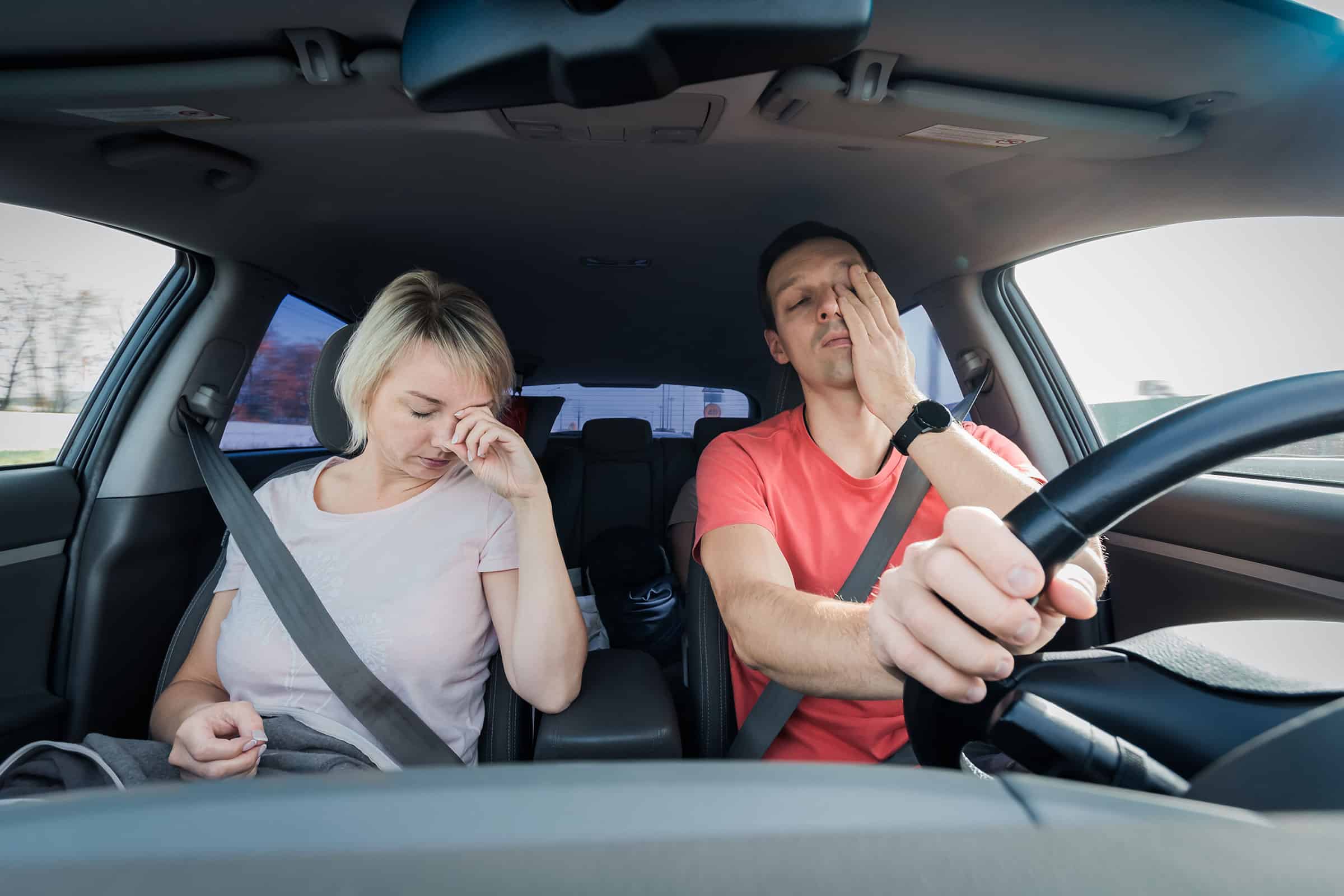
When you think of car accidents, the usual culprits—speeding, distracted driving, and alcohol—come to mind. But there’s one often-overlooked danger that claims thousands of lives every year: drowsy driving. According to the National Highway Traffic Safety Administration (NHTSA), driver fatigue plays a major role in serious and fatal crashes nationwide. Yet many drivers underestimate how dangerous it truly is.
Whether you’re a long-haul trucker, night-shift worker, or someone who simply didn’t get enough sleep, fatigue can impair your ability to operate a vehicle safely. In fact, sleep-deprived drivers are often just as dangerous as drunk drivers. If you or a loved one has been injured by a fatigued driver, understanding your rights is critical—and The Injury Firm can help.
If you or someone you love has been hurt in a drowsy driving crash, our experienced car accident attorneys are here 24/7 to help you recover the compensation you deserve. Contact The Injury Firm today for a free consultation at 954-951-0000.
What Is Drowsy Driving?
Drowsy driving occurs when a motorist operates a vehicle while impaired by lack of sleep. This can be caused by sleep deprivation, long work hours, untreated sleep disorders, medications that induce drowsiness, or even alcohol. The danger lies in the fact that a fatigued driver may fall asleep behind the wheel without warning—often with devastating consequences.
What makes drowsy driving especially lethal is that drivers who doze off make no attempt to brake, steer, or avoid collisions. It’s like handing control of your vehicle over to fate. These types of accidents tend to be more severe because they involve high speeds and full impact.
Common Characteristics of Drowsy Driving Accidents
- The driver fails to brake or swerve before impact
- The crash occurs on a high-speed road such as a highway or interstate
- The vehicle often drifts off the road or hits a stationary object
- Accidents typically happen late at night, early morning, or mid-afternoon
- In many cases, the crash involves a single vehicle
If you suspect a crash was caused by a fatigued driver, it’s essential to consult a skilled attorney who can investigate the circumstances and gather evidence—before it's too late.
How Common Is Drowsy Driving?
Drowsy driving isn’t just a rare occurrence—it’s a widespread and underestimated public safety threat. The statistics paint a grim picture:
- 4,111 fatalities were linked to drowsy driving from 2013 to 2017 (Source)
- 91,000 crashes were reported due to fatigued driving in 2017 alone—over half of them resulted in serious injuries
- 1 in 4 adults admits to driving drowsy at least once a month, according to the National Sleep Foundation
- The economic loss associated with drowsy driving exceeds $12.5 billion annually
- Internationally, drowsy driving accounts for 10–30% of all car accidents in countries like Australia, England, and Finland (Source)
These statistics underscore the severity of the problem. And yet, most drivers are unaware that sleep deprivation can affect them the same way alcohol or drugs would.
Top Causes of Fatigued Driving
Drivers become drowsy for many reasons, and understanding these can help determine liability in an accident. Here are the most common causes of drowsy driving:
- Sleep deprivation: This is the most obvious cause. Drivers who haven’t slept for 18–24 hours are as impaired as someone over the legal alcohol limit.
- Shift work: Employees who work night shifts or rotating schedules often experience disruptions to their sleep cycle. When driving home after long or irregular shifts, they are especially vulnerable to falling asleep behind the wheel.
- Sleep disorders: Conditions like sleep apnea or narcolepsy can cause involuntary sleep episodes during the day, even if the driver believes they are well-rested.
- Medications: Many prescription and over-the-counter drugs list drowsiness as a side effect. Antihistamines, antidepressants, and muscle relaxants are frequent culprits.
- Long-distance driving: Fatigue often sets in during long road trips, especially at night or when drivers are alone with minimal stimulation.
- Monotonous routes: Long, straight highways can lull drivers into a trance-like state known as “highway hypnosis,” which increases the risk of fatigue-related accidents.
In legal cases, it’s important to identify these root causes and determine whether the at-fault driver knew—or should have known—they were unfit to drive. An experienced personal injury attorney can subpoena work logs, medical records, or prescription history to support your claim.
What Are the Warning Signs of Drowsy Driving?
Recognizing the symptoms of fatigue early could save your life. If you're driving and experience any of the following, it’s time to pull over and rest:
- Difficulty keeping your eyes open or head up
- Yawning repeatedly or uncontrollably
- Wandering thoughts or daydreaming
- Drifting between lanes or hitting rumble strips
- Missing road signs or turns
- Feeling irritable or restless while driving
- Memory lapses—forgetting the last few miles driven
Unfortunately, many drivers ignore these symptoms. They push through, thinking they can make it home or to their destination. But in doing so, they risk their lives—and others on the road.
How to Prevent Fatigued Driving Accidents
Preventing drowsy driving starts with prioritizing rest and self-awareness. Here are some tips to stay alert and avoid fatigue-related crashes:
- Get 7–9 hours of sleep: Adults should aim for this every night, especially before long drives.
- Plan rest stops: On road trips, stop every 100 miles or 2 hours to stretch, eat, and hydrate.
- Travel with a co-pilot: If possible, share the driving duties or have someone to talk to, which helps maintain alertness.
- Avoid alcohol and sedatives: Even small amounts of alcohol or sleep-inducing drugs can significantly impair your alertness.
- Take naps: A 20–30 minute nap before driving—or during a stop—can improve alertness temporarily.
- Drink caffeine: While not a long-term solution, caffeine can help improve alertness in the short term. Pair it with a nap for even better results.
Prevention is not only a personal responsibility—it’s also a legal obligation. If a fatigued driver fails to take reasonable steps to avoid causing harm, they can be held liable in a personal injury lawsuit.
Is Drowsy Driving Worse Than Drunk Driving?
Studies have shown that both drunk and drowsy driving impair your cognitive function, coordination, and reaction time. In fact, the CDC reports that staying awake for more than 18 hours affects your brain similarly to having a blood alcohol concentration (BAC) of 0.05%. After 24 hours, it’s similar to 0.10%—above the legal limit in all U.S. states.
One key difference: drunk drivers may at least try to avoid a crash by braking or swerving. But a drowsy driver who falls asleep behind the wheel doesn’t even get that chance. Their car may drift uncontrollably into another vehicle, barrier, or pedestrian—often at full speed.
That’s why drowsy driving is increasingly treated with the same level of legal scrutiny as DUI. It’s no longer a “soft excuse.” It’s a deadly, preventable form of negligence.
What Are Your Legal Rights After a Fatigued Driving Accident?
If you were injured in a car accident caused by a drowsy driver, Florida law allows you to seek compensation for your losses through a personal injury claim. Your legal rights include pursuing damages for:
- Medical expenses (emergency care, surgeries, rehab, medications)
- Lost wages due to missed work
- Loss of future earning potential (in severe injury cases)
- Pain and suffering
- Emotional distress
- Property damage (e.g., vehicle repair or replacement)
To win your case, you must prove that the other driver acted negligently by getting behind the wheel while fatigued and that this negligence directly caused your injuries. Working with an experienced Fort Lauderdale car accident lawyer gives you the best chance of proving liability and securing full compensation.
How to File a Drowsy Driving Accident Claim
Filing a claim after a fatigued driving accident involves several key steps. Here’s what to expect when working with The Injury Firm:
- Free Consultation: We review the facts of your case, assess liability, and outline your legal options.
- Investigation: We gather evidence, including police reports, surveillance footage, medical records, witness testimony, work logs, and expert opinions to support your claim.
- Insurance Negotiations: Our attorneys handle all communications and negotiations with the insurance companies, ensuring you’re not lowballed.
- Filing a Lawsuit (if necessary): If the insurance company refuses to settle fairly, we file a personal injury lawsuit and represent you in court.
- Settlement or Trial: We fight to win maximum compensation through either a fair settlement or jury verdict.
Don’t wait. Florida has a statute of limitations for personal injury claims—generally two years from the date of the accident. Delaying can harm your chances of success. Let us fight for your rights while you focus on recovery.
Contact a Drowsy Driving Accident Attorney in Fort Lauderdale
The Injury Firm has years of experience handling complex auto accident claims, including those involving driver fatigue. If you or a loved one has been hurt by a negligent driver who fell asleep at the wheel, we can help.
We don’t charge any fees unless we win your case. Our compassionate, aggressive legal team is here 24/7 to provide guidance and representation.
Schedule a FREE consultation now by calling 954-951-0000 or contact us online.
Frequently Asked Questions (FAQ)
What is the most common time for drowsy driving accidents?
Most drowsy driving accidents occur late at night (midnight–6 AM) or in the mid-afternoon (1–3 PM), when the body’s internal clock naturally dips in alertness.
How can I prove the other driver was drowsy?
Proving fatigue can involve work schedules, medication records, witness statements, dashcam footage, police observations, and expert testimony on driver behavior.
Is drowsy driving considered negligence in Florida?
Yes. If a driver knowingly operates a vehicle while too fatigued to drive safely, it may be considered negligence under Florida law—especially if they caused an accident.
Can I sue even if I wasn’t wearing a seatbelt?
Yes, but your compensation may be reduced based on Florida’s comparative fault law. Not wearing a seatbelt could be seen as contributing to the severity of your injuries.
What if the driver denies falling asleep?
Many drivers omit this detail in police reports. However, an attorney can uncover the truth using physical evidence, surveillance footage, and expert accident reconstruction.
Will my insurance cover me if the other driver was uninsured?
If you carry uninsured motorist (UM) coverage in Florida, it may help pay for medical expenses, lost wages, and more, even if the at-fault driver lacks insurance.
Still have questions? Contact The Injury Firm at 954-951-0000 and speak to a Fort Lauderdale car accident lawyer today.
CONTACT US NOW
FREE CONSULTATION